By: Dr. Sean Pastuch
KEY TAKEAWAYS:
- Pain and damage aren’t the same thing. Persistent pain is usually out of proportion to any tissue damage.
- You can genuinely hurt and still be “sore but safe.” It’s often oversensitivity, not injury.
- Scans don’t tell the whole story: pain-free people have “bad” findings, and people in pain have clean scans.
- Being told “you’ll just have to live with it” can make pain worse (the nocebo effect), and it’s usually wrong.
You’ve had the scan. Either it came back “normal” and you were left wondering why you still hurt, or it showed something, and that something became the explanation for everything. Maybe you were told the hardest sentence of all: you’re just going to have to learn to live with it.
Here’s what almost no one explains, and it changes everything: pain doesn’t equal damage.
Pain and damage aren’t the same thing
Pain is your body’s alarm system, and for most of your life it’s useful: touch a hot stove, feel pain, pull your hand away. Fast, protective, exactly right.
But when pain sticks around for months or years, something shifts. Persistent pain is almost always out of proportion to anything actually happening in the tissue. The alarm has become over-protective, turned up so high that ordinary movement sets it off, even when nothing is being harmed. You can hurt, genuinely, and still be sore but safe.
That isn’t us saying your pain isn’t real. It’s very real. It’s saying the pain is less about damage than about a system that’s become oversensitive, and sensitivity can change. Damage feels permanent. Sensitivity doesn’t.
Why the scan doesn’t tell the whole story
This is why imaging confuses people. Plenty of pain-free people walk around with “bad” findings on a scan, and plenty of people in real pain have clean ones. The picture of your tissue and your experience of pain don’t line up as neatly as we’ve been led to believe. A finding on a scan is not a sentence.
The words you were told may be part of the problem
There’s a well-studied effect called nocebo, the opposite of placebo. Placebo: you expect good, and good tends to follow. Nocebo: you expect bad, and bad tends to follow. And research is clear that the words of a trusted professional carry enormous weight; they can shape what you believe about your body for years.
So when someone says “you have a bad back,” or “your knees are shot,” or “you’ll just have to live with it,” those words don’t only describe your situation; they can quietly make it worse. They plant fear. Fear makes you avoid movement. Avoidance makes you weaker and more sensitive. The pain deepens, and it feels like proof the scary story was true.
It usually wasn’t. It was a sentence someone handed you that you were never obligated to keep.
What this means for you
If pain doesn’t equal damage, then you’re not stuck. There’s a way out.
Your pain isn’t one solid, permanent thing. It’s built from pieces: movement patterns, strength and mobility gaps, sleep, stress, and the beliefs you’ve absorbed along the way. Anything built from pieces can be taken apart, one change at a time.
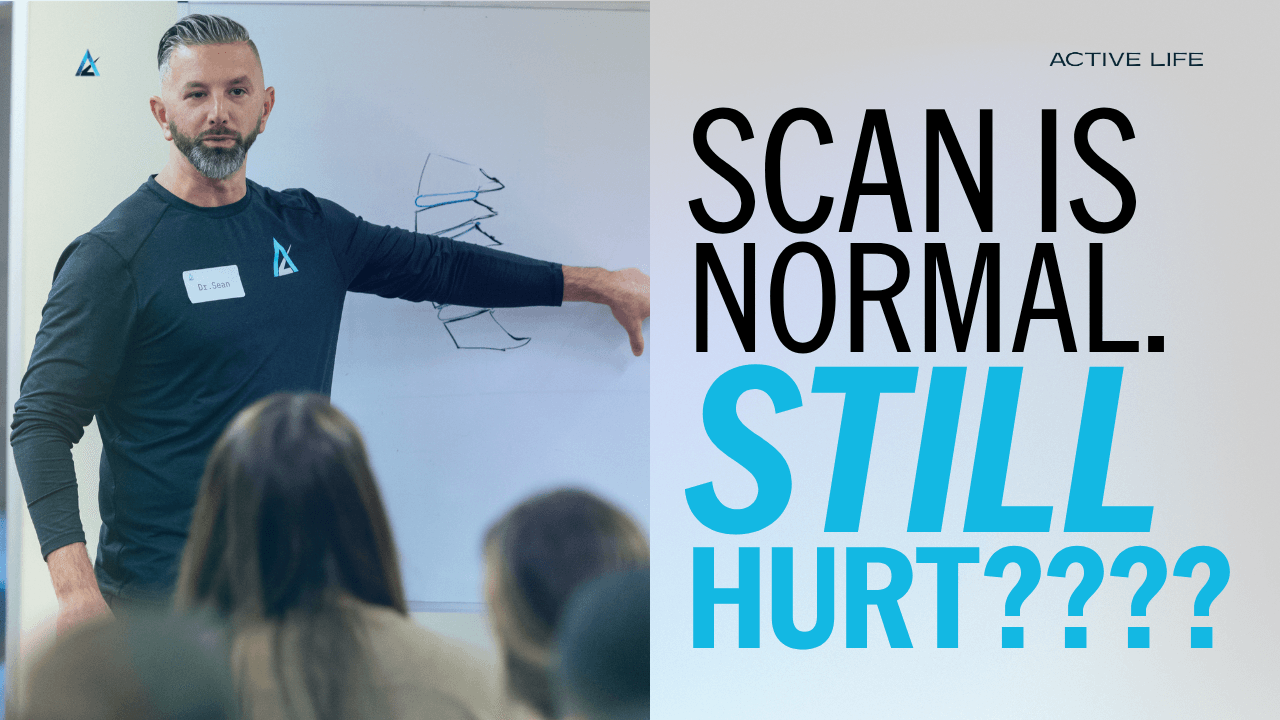
If you've been told to just live with it, and something in you refuses to accept that, that instinct is right. Finding out what's actually driving your pain, and what you can change, is exactly where we start with every person we work with.
Pain shouldn't be the thing deciding what you can and can't do. Find out if we can help:
ON LONG ISLAND? CHOOSE YOUR LOCATION > ANYWHERE ELSE? FIND A PRO NEAR YOU >Are you a coach who wants to help clients this way?
Everything above is what we teach professionals inside AL-P. If this is the work you want to be doing, learn the method and turn pro
TURN PROFAQ
A: Pain and tissue damage don't line up as neatly as we're taught. Persistent pain is often driven by an oversensitive nervous system, not by damage a scan would show.
A: Usually not. When pain has lasted months or years, it's almost always out of proportion to any real harm. You can hurt and still be safe.
A: Usually not. That message can actually deepen pain by planting fear. Pain built from changeable pieces (movement, strength, stress, beliefs) can be changed.
Related Posts:
Is It Safe to Exercise With Pain? The Simple Rules We Use
You've Tried Everything for Your Pain and Nothing's Worked — Here's Why
The Words You Use About Your Body Might Be Keeping You in Pain
Collaborator: Dr. Ryan Summers
Active Life | Live More. Hurt Less.®
📖 Liked this? There's a whole book of it.
This article is a taste of the bigger idea. Live More. Hurt Less. by Dr. Sean Pastuch is the full playbook for living with less pain and more capability — the same thinking, start to finish.
order the book