


Pain is far more than just a physical experience; when your clients are in pain, they only care about getting out of it.
Pain changes the lens they see the world through, instead of seeing opportunity and broad horizons. They see the things they’re missing out on, and they’re afraid they’ll miss out on more and more if they don’t solve the problem now.
As a fitness professional, you need the capacity to manage their pain in conjunction with the work you’re doing with them, and it’s tough to do so without a structured system.
By the end of this article, you’ll have a system and resource to download and use with your clients.
Stages of pain
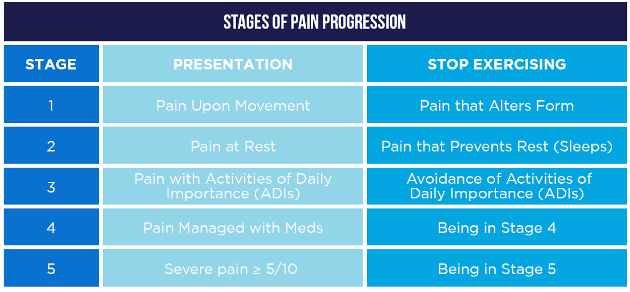
There are five stages of pain. Each stage of pain presents differently and is outlined in the table below.
It’s essential to identify which stage of pain your client is currently experiencing in order to track their progress and help you make informed decisions about what their exercise and lifestyle changes will look like.
Pay close attention to the dark blue column. These are your thresholds for when to stop exercising to avoid doing more harm than good.
Pain levels
Assuming you’ve established that your client is in a stage of pain that’s acceptable to continue exercise, you need to establish their pain level.
We use a scale from one to ten and have found that keeping symptoms at a 4/10 or less usually keeps clients from spiraling into excessive symptoms that interfere with their daily activities or lead to flare-ups lasting more than 24 hours.

Symptoms with movement
Because your client is in pain, you need to monitor how it behaves with movement. This both keeps your client safe and informs your decisions about movement patterns, weight, volume, and range of motion. If their symptoms improve or stay the same with movement, you’re on the right track.

Symptoms after stopping
Monitoring symptoms after stopping provides valuable information about the irritability of your client’s condition. If symptoms stay above baseline or build after stopping for more than one minute, you’ve pushed too far and need to dial back.

Symptoms post exercise
Some symptoms and a bit of discomfort post-exercise is normal. Even if your client isn’t injured, some post-training soreness is very common. However, when an injury is involved, you don’t want symptoms to stay elevated above baseline for more than 48 hours.

Irritability index
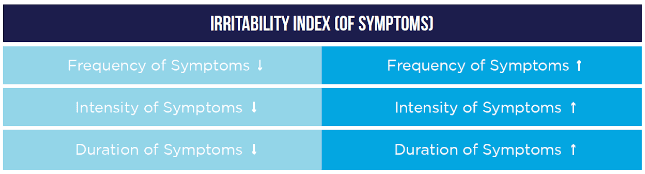
All of these rules are helpful, but as we said at the beginning, pain isn’t just physical; it’s also emotional. That makes tracking progress essential; the irritability index makes that easy even when there are flare-ups along the way. If symptoms are less frequent, intense, or long-lasting, you’re making progress in the right direction. However, if the frequency, intensity, and duration are increasing, you need to make adjustments, and the information you collect from the previous rules will help you make that happen.
Download the color-coded chart to use with your clients below.


