By: Dr. Sean Pastuch
KEY TAKEAWAYS:
- Premium and luxury are the same thing, and neither means adding more. They mean removing friction so the client doesn’t have to think.
- Raising prices little by little, or piling on daily check-ins and weekly videos, signals the opposite of premium. Price once, and price well.
- A premium offer has a high-friction buying process and a low-friction service process — not the other way around.
- You need firm processes for enrollment and service, and the discipline to say no to anyone who wants to go off-process.
- A service is reliably premium when three things are true: high demand, low supply, and extremely high value.
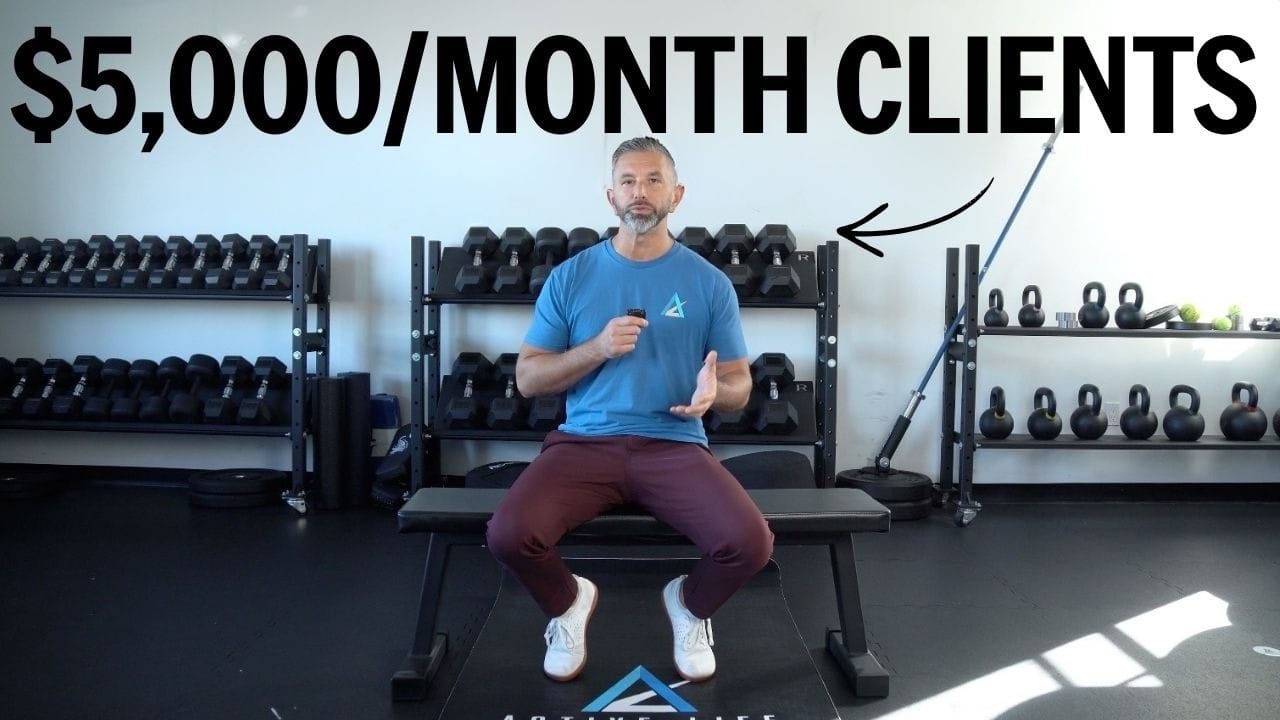
The reason most coaches can't land premium clients isn't their marketing. It's that they misunderstand what "premium" means.
Dr. Sean Pastuch is a former chiropractor and personal trainer and the founder of Active Life. The Active Life Flagship gym is the most expensive in its town by a wide margin — over $800 a month for membership, sessions well above the next-priciest option, no volume discounts — and the only one in town with a 45-day wait list. Here's how he thinks about premium, and why most attempts at it quietly backfire.
Premium isn't more. It's less to think about.
Most coaches try to signal premium by adding: I'll coach your nutrition, I'll check in every day, I'll send you videos, I'll teach you to program for yourself. Premium clients don't want any of that. They want to not have to think about it at all.
Think about a high-end CPA. They don't send weekly updates on what to record or how much you saved this week. You don't hear from them until it's time to handle your taxes, because the entire value is that you get to not think about it.
"People in the coaching world think premium or luxury is adding more. Premium clients want to not have to think about that at all."
The $5,000 text message.
Sean charges $5,000 a month for a remote one-on-one client. Ask yourself what you'd have to do to be worth that: pro nutrition, daily accountability, a brilliant program, send a chef? Here's what he actually does: a morning text asking how the client slept, what their stress looks like, how eating's going, and what their day allows for training. Then he writes something that meets them where they are that day — sometimes an hour, sometimes five minutes.
"Your value is not the program that you write. The value is how much friction you can remove."
Could someone write that client a better program? Sure. But the client wouldn't follow it. The value is removing the friction between them and a better life, including the friction of how everyone else would ask them to get there.
High friction to buy. Low friction to receive.
At Active Life's flagship, a new client books a 30–45 minute discovery call. About 80% get invited to a 90-minute-to-two-hour in-person consultation — a deeper interview, a physical assessment, and some education — and they're still not a client, and no offer has been made. Only after everyone agrees it's a fit, and the client commits to training at least twice a week, do they get to enroll.
That discipline extends to service. Someone once asked to buy a single session for $300 — double the normal rate. The answer was no. It's not on the menu, because one-off exceptions break the machine that works.
"If you're running six-week programs, weight-loss challenges, free first sessions, money-back guarantees — you are screaming that you don't have the confidence that you can serve the client who wants to work with you."
The three things that make a service premium.
Even if you can't market to save your life, an offer is reliably premium when all three of these are true:
- High demand. Everyone you know knows somebody with the problem — like aches and pains, or weight to lose.
- Low supply. There aren't many people who can actually solve it. If it's easy to find ten options, it isn't premium.
- Extremely high value. If you could snap your fingers and make the problem disappear, they'd pay $10,000 for it without blinking — and more if you did it without friction.
People dealing with pain who've already seen the physical therapist, the chiropractor, and other trainers without getting better are the clearest example: enormous demand, tiny supply, and a result they'll gladly pay a premium for if you can deliver it reliably.
You already do something people want and need. What your market is deciding is whether you're the one to do it with. The L1 workshop is where you start building the skill that makes the answer yes.
Start inside the assessment system. The L1 Biomechanics & Assessment Workshop is two days, live online, $19 (it was $1,500 in-person).
GRAB A SPOT — $19FAQ
A: No. Premium is removing friction, not adding to-dos. The best clients are paying you so they don't have to think about it.
A: Incremental, repeated raises are what annoy people. Do it once, do it well, and pair it with a service worth the new price.
A: Check it against three things: high demand, low supply, and extremely high value. Helping people out of pain hits all three.
A: One-off offers — free sessions, six-week challenges, money-back guarantees — and letting people go off your process. They signal you doubt your own service.
A: The $19 L1 Assessment Workshop. Four hours, live online, and the lowest-risk way to see if this is the work you want to be doing.
Adapted from Dr. Sean Pastuch. Watch the full video above.
📖 Every coach should read this one.
Live More. Hurt Less. by Dr. Sean Pastuch is the thinking behind the method — how pain actually works, and why the members who've "tried everything" are still stuck. Read it to sharpen how you coach, then put it in your clients' hands.
ORDER the bookActive Life Professional | Turn Pro.