

By: The Active Life Team
KEY TAKEAWAYS:
- Casey loved coaching CrossFit. She was so committed she spent 30+ minutes before every class hand-writing a whiteboard plan for all 25–30 people so no one felt overlooked.
- The burnout didn’t come from not caring. It came from caring with nowhere to grow: she was in the business of keeping people from getting hurt, and she wanted to actually get them somewhere.
- She didn’t want to leave fitness — she wanted a new option inside it. Having been an Active Life client herself, she knew a better way existed.
- Her biggest obstacle wasn’t the money. She could afford it. It was self-doubt — whether she’d be good enough.
- Now she works for herself, turns away clients who aren’t a fit, and describes a “freedom in my heart and soul” she didn’t know was possible.
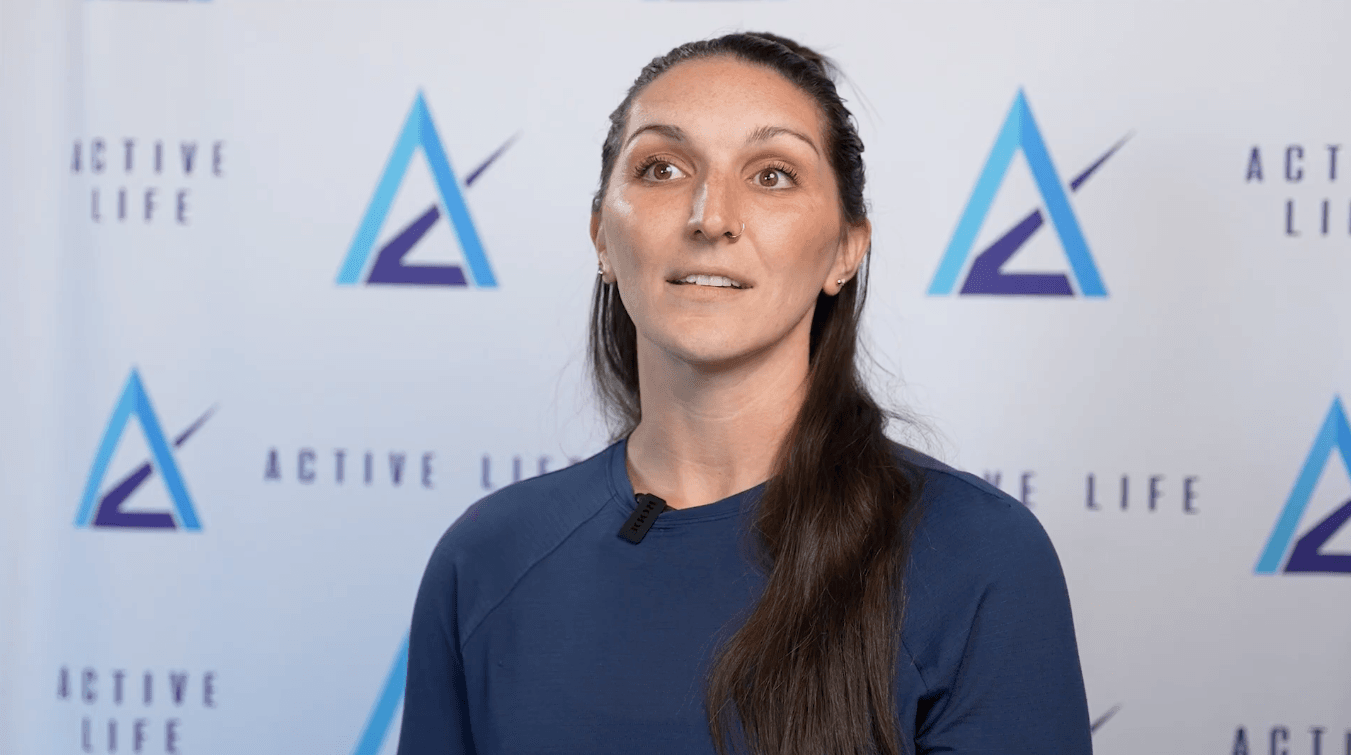
Some coaches burn out because they stop caring. Casey burned out because she couldn't stop.
Casey is an Active Life Professional in Wilmington, North Carolina. Before this, she was coaching CrossFit — mostly group classes, some personal training on the side — working from the crack of dawn to the last class of the night. And she loved it. She thought she'd found her calling, was proud of the professionalism she'd built, and genuinely believed that was the best she'd ever do. She was okay with that. Here's what changed her mind.
The burnout didn't come from not caring. It came from caring with nowhere to grow.
Casey cared about the people in her classes more than the format could hold. With 25 to 30 people in a room, there wasn't enough of her to go around, so she made more of herself:
"I was dedicating minimum a half hour before classes making sure that everyone had a whiteboard written out with their plan on it… I did everything that I could to bring my level of care to the class atmosphere."
It worked — everyone felt taken care of. But the ceiling was real, and she could feel it:
"Where the burnout began was I just was in the business of making sure people don't get hurt or get hurt worse. And I wanted to be able to do more, and I felt like I was dumping a lot of energy into something that couldn't get them there ultimately."
She kept telling herself that because she loved it so much, it would be worth it. Eventually the math stopped working:
"I was working so much that it wasn't worth it, and people were ultimately not getting the best version of me when I was showing up."
She didn't want a new career. She wanted a new option inside fitness.
This is the part that matters for any coach who feels stuck but doesn't want out. Casey never planned to work in a gym — she'd trained to be a teacher, worked in schools. Once she found fitness, she never wanted to leave it. So when she hit the wall, she wasn't looking for a different career. She was looking for a different way to do this one.
"It wasn't up to me to decide on a new career path. I knew this is what I was supposed to be doing. I just needed to figure out how."
She had a reference point. Years earlier, battling CrossFit injuries, she'd been an Active Life client herself — and instead of being told to modify forever, she'd been genuinely helped. She remembered that a better way existed. That memory is what pointed her toward turning pro.
The hardest part wasn't the money. It was getting out of her own way.
Casey is refreshingly honest about the real block. It wasn't cost — she could afford it. It was doubt.
"The most challenging part of starting with Active Life was just getting out of my own way. I knew I wanted to do it… I just didn't know if I was going to be able to show up in a way that would be good enough."
What convinced her she'd made the right call wasn't a sales pitch. It was being pushed:
"I got fully immersed in the community and started having really hard conversations… I was challenged in a way that I hadn't been before, and I knew that this was the level of growth that I was missing."
She graduated the curriculum in September and has been on her own for about six months, still growing.
What changed: from begging for clients to choosing them.
Casey phased out group classes and now works for herself, one-on-one, renting space in a boutique gym. The shift she describes isn't just financial — it's a change in standing.
"I never ever thought in my whole life I would say no to someone that wanted to work with me… There was a period of time where I felt like I was begging people to want to work with me."
Now she has the skills to be selective, and she treats it as a milestone:
"I remember the first person I said no to. I considered that a win, and I continue to, because I know they're going to end up in better hands for what they're looking for."
She's found the client she's best for, too — people who don't yet have a foundation to step into a gym and move with confidence, until training becomes a normal part of a bigger life.
"What's your real job?"
Every coach who's been asked this knows the sting. Casey got it a lot:
"Too many people had walked into my classes and said, 'So what do you do for work? …but what's your real job?' That stings a little bit. That will cut your ego down."
The turning point was deciding for herself, without waiting for anyone's permission:
"I put my head down and put my eyes forward and made this really big decision for myself without worrying if people thought it was a good idea or not. I get to prove every single day that it was the best decision I've ever made."
The freedom she describes now isn't only about the schedule or the money. It's quieter than that:
"I'm feeling a level of freedom in my heart and my soul that I didn't realize I could have."
She always felt she had a real job. Now she believes fully in the work she's doing. That's her experience — one coach who stopped asking for permission and bet on the work. What made it possible wasn't a new career. It was the skills to finally get people where she'd always wanted to take them.
You can care more than anyone in the room and still not get people where they need to go in a class of 30. That's not a limit on you — it's a limit on the format.
Start inside the assessment system. The L1 Biomechanics & Assessment Workshop is two days, live online, $19 (it was $1,500 in-person).
GRAB A SPOT — $19FAQ
A: Casey loved it too. The burnout didn't come from disliking the work; it came from hitting the ceiling of what she could do for people in a room of 30. Turning pro let her actually get people where group couldn't.
A: Yes. Casey coached group classes while going through the curriculum, then phased out of group as she found her footing one-on-one.
A: That was Casey's real block — not money, self-doubt. Getting into the community and the hard conversations is what showed her the growth she'd been missing.
A: No. Casey works for herself, renting space in a boutique gym. You don't have to own a facility to build this.
A: The $19 L1 Assessment Workshop. It's two days inside the system, and the lowest-risk way to find out if this is the work you want to be doing.
This is Casey's story in her own words — an Active Life Professional in Wilmington, North Carolina. Video above.
📖 Every coach should read this one.
Live More. Hurt Less. by Dr. Sean Pastuch is the thinking behind the method — how pain actually works, and why the members who've "tried everything" are still stuck. Read it to sharpen how you coach, then put it in your clients' hands.
ORDER the bookActive Life Professional | Turn Pro.