

By: The Active Life Team
KEY TAKEAWAYS:
- In a typical CrossFit class, three or four out of every ten members are scaling because something hurts or they’ve lost range of motion — and it’s been that way six months or more.
- Group class already gave them your best shot. When it doesn’t fix the problem, that member needs a one-on-one assessment, not another class. That’s not a coaching failure. It’s a different job.
- A coach who can assess and resolve those problems is the best-positioned coach in the world to build a real income: the clients are already in your gym, already motivated, already paying for a premium membership.
- Everybody wins. The member gets their life back, the coach builds a career, the owner profits. On Best Hour of Their Day, Jason Ackerman made the case plainly: every affiliate should have one of these coaches, if not two or three.
- The problem you solve is worth far more than you charge for it. Most coaches undercharge because they price their time instead of the outcome.
You run a class of ten. Nine or ten of them scale something. For most of them, that's fine — you scaled it well and they got a great workout. But look closer at the ones who scale the same movement every time, because a hip pinches or a shoulder won't go overhead or a knee's been cranky for a year. How many is that? Three, maybe four out of ten.
Now run the math on a hundred-member gym. Forty people are scaling because something hurts or they can't access their range of motion. They've been coming two or three days a week for months. They're good members. And the thing that's been bugging them is still there.
Those forty people don't need a better-scaled workout. They need someone who can sit down with them one-on-one, assess what's actually driving the problem, and resolve it — so they can stop scaling around it and get back to training the way they want to. A coach who can do that is rare. Most gyms don't have one. That's the gap.
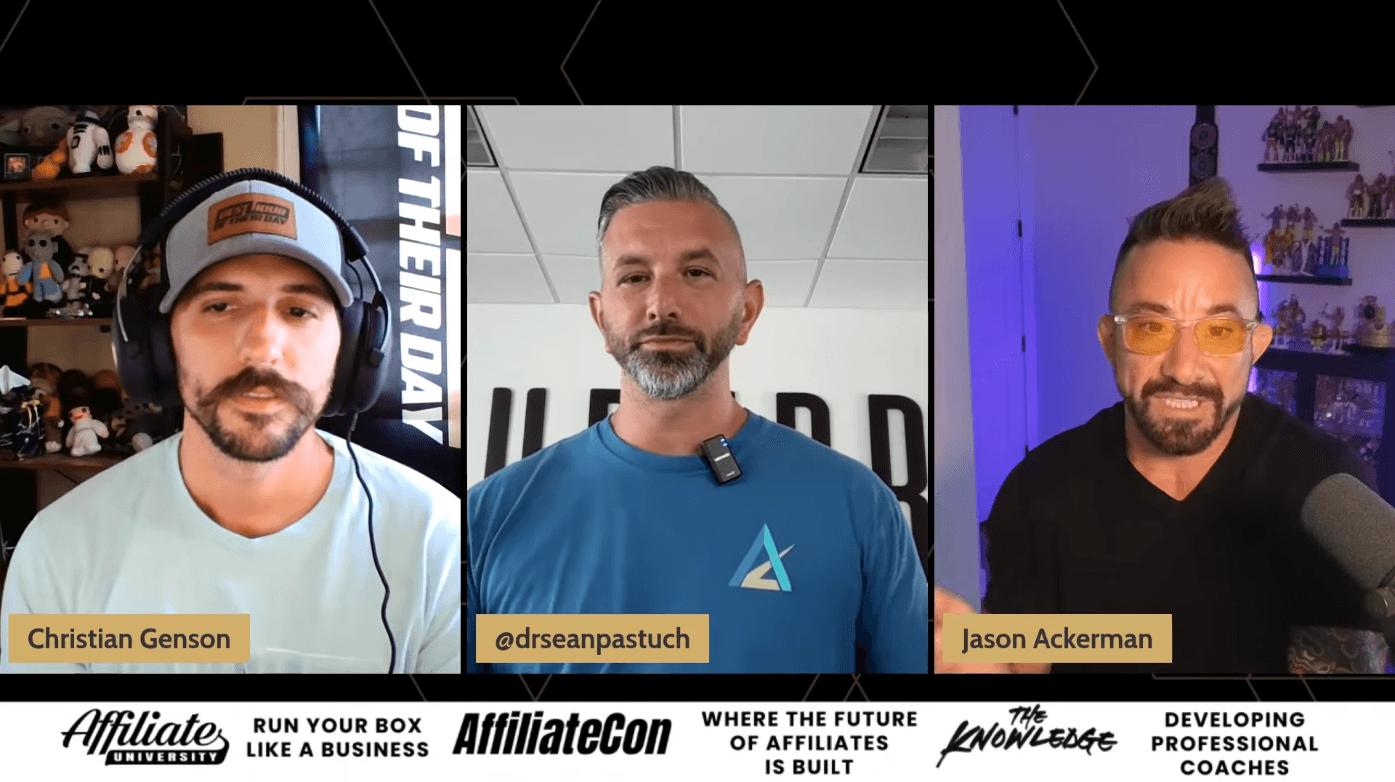
On the Best Hour of Their Day podcast, Dr. Sean Pastuch talked this through with hosts Jason Ackerman and Christian. Jason — a Level 4 and a former three-time affiliate owner — put it plainly: there should be a coach like that in every single CrossFit affiliate in the world, if not two or three. Here's the case for why.
Isn't that just a scaling problem I should fix in class?
For that specific member, usually not — and it's not because you're bad at your job.
If someone has been scaling around the same ache for six months while coming to class three times a week, you've already given them your best shot in group. It didn't do the job. That doesn't make you a bad coach. It means that person needs something that goes beyond what any group class can give them.
Group is the best model on the planet for getting people fit. Sean's words, and he owned three affiliates: he hasn't seen anything better, consistently. But a single class caters to a bullseye, and some members sit too far from the center to be served by it. Worse, the scale that keeps them "in the workout" sometimes makes the underlying problem worse. Rowing instead of running feels like a smart sub — until you realize the person you handed it to has a plantar fascia or Achilles issue, and rowing loads exactly the wrong thing. It's a bad scale that feels like a good one.
Why is a CrossFit coach the best-positioned person to do this work?
Because the hard part of building a coaching business — finding motivated people who'll pay for results — is already solved. They're standing in front of you.
Sean put it this way: CrossFit gyms are the most fertile soil there is for this work. The members are already motivated. They've already shown you they'll put in the work. They've already chosen a gym that costs more than the globo down the block. People used to get on airplanes to fly to Sean for help with exactly this. Your version of that person is doing wall balls forty feet away.
What does it actually do for the coach, the owner, and the member?
Everybody gets paid in the currency they came for. Sean calls it conscious capitalism, borrowed from Whole Foods founder John Mackey: the client gets something worth more than they paid, the coach gets fair value for their skill, and the owner gets paid well for solving the problem inside their business.
The numbers he shared from Active Life's coach education (AL-P): the average coach's personal income goes up by roughly $1,000 a month by the end of the second month, about $2,000 by the fourth, and around $5,000 a month by the end of the first year. And when a coach is making $5,000 more a month, the owner is making an extra three or four thousand on top of that. Nobody's getting rich off the coach's back. The business just got more valuable, and the coach who built a career inside it has a reason to stay instead of burning out and leaving.
Real example from the episode: a gym in Pauling, New York — a small upstate town, around 80 members and basically at capacity — put one coach through the education. That coach is now booked, making real money, and pulling new people into the gym. The owner's problem now is a good one: do you have anyone else I can hire?
The real reason coaches don't offer this: they're afraid of the price
Not the member's budget. The coach's own discomfort with the number.
Sean's story about a client named Steve makes the point better than any pitch. Steve walked in, insisted on buying twelve sessions up front, and peeled $1,440 out of his pocket. His goal: climb a rope. Four minutes later he was up and down it. Sean tried to hand the money back — goal achieved. Steve refused. "I wasn't buying the time. I was buying the ability to climb the rope, and you gave me that."
Then the real reason came out. Steve runs a Spartan race every year with friends, and every year he can't climb the rope, so his friends rib him in the parking lot. This year his six-year-old son was coming to watch. "I'm a superhero to my son right now. I paid you $1,440 to be a superhero to my son for one more year." So they didn't stop. They trained the rope muddy, wet, legless, after fifty burpees, after three miles — until failing was impossible.
The lesson: you don't know what resolving the problem is actually worth to someone until you ask. And when you find out, the price you were nervous to say out loud looks small.
Sean has a thought experiment for coaches who still flinch. Say you help a member squat to depth, pain-free, loaded, going for PRs again — four to six months of work, and it costs them $10,000. Now, on the other side of it, you offer them $30,000 to go back to the day before they started, with no ability to ever fix it. How many take the money? None. Which means the problem you solved was worth at least three times what you charged. If you can actually resolve it, undercharging isn't humility. It's putting your feelings about money ahead of the member's life.
How do you know if a member actually wants help? Ask.
There's no pushiness required. Active Life teaches coaches six questions:
- Is this actually a problem for you?
- How long has it been a problem?
- What have you tried to resolve it?
- Why didn't those things work?
- Is fixing it a priority for you right now?
- If I made time to sit with you privately, would you want to talk about working together one-on-one to resolve it?
That's it. You're finding out whether it's real, whether it matters to them right now, and whether they want a hand. Nothing about that is a sales pitch.
A five-minute exercise to see the opportunity in your own gym
Sean's challenge to every coach listening:
Picture one member who scales every day because something hurts or they've lost range of motion, and who you know would love to fix it. Now actually answer, out loud: How does that person feel every single day they walk in and have to scale? How does that feed into the rest of their life — are they shorter with their kids, less patient at work, more likely to skip cooking because they're out of mental energy? Could you help them? How would you know you could? How sure are you? And how would their life change if they did it?
Write all of that down about one person. Then do it for a second. Read it every morning before work. After a week, Sean's bet is that you won't be able to look at those members and not offer them help — regardless of what it needs to cost.
Why this matters more than a number on an invoice
Sean spent seven years with a cervical disc injury he helps other people resolve. One night, walking home from a block party, his five-year-old asked to ride on his shoulders and he said no. He didn't sleep — not from pain, but from the question: are my kids going to grow up thinking their dad is strong and capable, or thinking their dad has a bad neck? He hired one of his own staff. Six months later he was back to everything. He still carries all four of his kids on his shoulders.
That's the work. Not "pain-free" — Sean will tell you pain-free is a myth. It's making sure pain never gets to decide what someone can and can't do. He calls the alternative compromise: the quiet acceptance that living less is reasonable. Compromise is the disease, precisely because it feels so reasonable.
Your members are compromising right now. You can already coach the scale that doesn't feel like less-than. What you might be missing is the system to actually resolve the thing underneath it — and the confidence to charge what it's worth.
You've watched members scale around the same ache for months and wished you could actually fix it.
Whether you want to become the coach who does this work, or you're an owner who wants a coach like this in your gym, it starts the same place.
Start inside the assessment system. The L1 Biomechanics & Assessment Workshop is two days, live online, $19 (it was $1,500 in-person).
GRAB A SPOT — $19FAQ
A: No. Group class is the best model there is for getting people fit. Some members simply need something beyond what any class can give them. Offering it isn't an admission of failure — withholding it is the real miss.
A: Most can afford a season of it — twelve sessions, three to six months — even if not forever. They're already paying more than the globo gym down the street. Nine times out of ten the block isn't the member's budget, it's the coach's discomfort saying the price out loud.
A: Ask the six questions: is it a problem, how long, what have you tried, why didn't it work, is it a priority, and would you want to sit down and talk about fixing it together. You're diagnosing whether they want help, not pitching.
A: That's what an assessment system teaches — how to identify what's causing the member to scale, which scales actually make things worse, and what to program instead. The $19 L1 Assessment Workshop is where that starts.
A: No. This is coaching: assessing and programming to restore capability. The goal is to get so good that the members other coaches can't help — and eventually the ones physical therapists refer out — start coming to you.
This article draws on Dr. Sean Pastuch's conversation on the Best Hour of Their Day podcast with hosts Jason Ackerman and Christian. Full episode embedded above. Dr. Sean's book, Live More. Hurt Less., is available on Amazon.
📖 Every coach should read this one.
Live More. Hurt Less. by Dr. Sean Pastuch is the thinking behind the method — how pain actually works, and why the members who've "tried everything" are still stuck. Read it to sharpen how you coach, then put it in your clients' hands.
ORDER the bookActive Life Professional | Turn Pro.